
Australian Native Plants: A Guide to Cultivating and Conserving Your Backyard’s Heritage
Australia is home to some of the most diverse and unique flora in the world. Integrating Australian native plants into your backyard not only adds a stunning visual appeal but also supports local ecosystems, conserves water and attracts native wildlife. This guide explores 10 common Australian native plants perfect for any backyard, provides tips for their care and highlights five native plants urgently needing conservation.
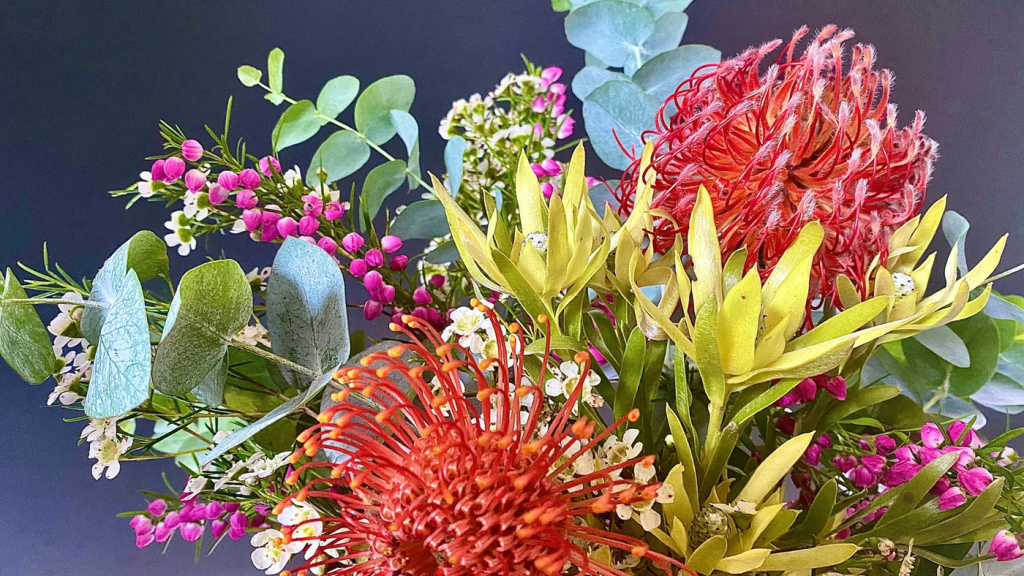
Source: Matilda’s Flowers
Why Choose Australian Native Plants for Your Backyard?
Australian native plants are perfectly adapted to the continent’s diverse climates, from arid deserts to lush rainforests. These plants offer:
- Low Maintenance: They thrive in local soil and weather conditions.
- Water Efficiency: Many require less water than exotic species.
- Wildlife Support: Native plants attract birds, bees and butterflies.
- Eco-Friendliness: Reduced need for fertilizers and pesticides.
By growing Australian native plants, you contribute to preserving the country’s natural heritage and creating a sustainable environment.
10 Common Australian Native Plants for Your Backyard
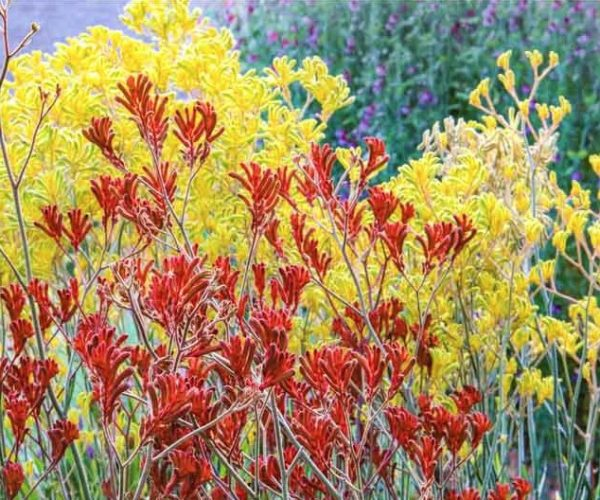
Source: Plants for Spaces ( Kangaroo Paw)
1. Kangaroo Paw (Anigozanthos spp.)
Description: Known for its vibrant, velvety flowers resembling kangaroo paws, this iconic plant adds color and texture.
Care Tips: Prefers full sun and sandy, well-drained soil. Water sparingly once established. Deadhead spent flowers to encourage growth.
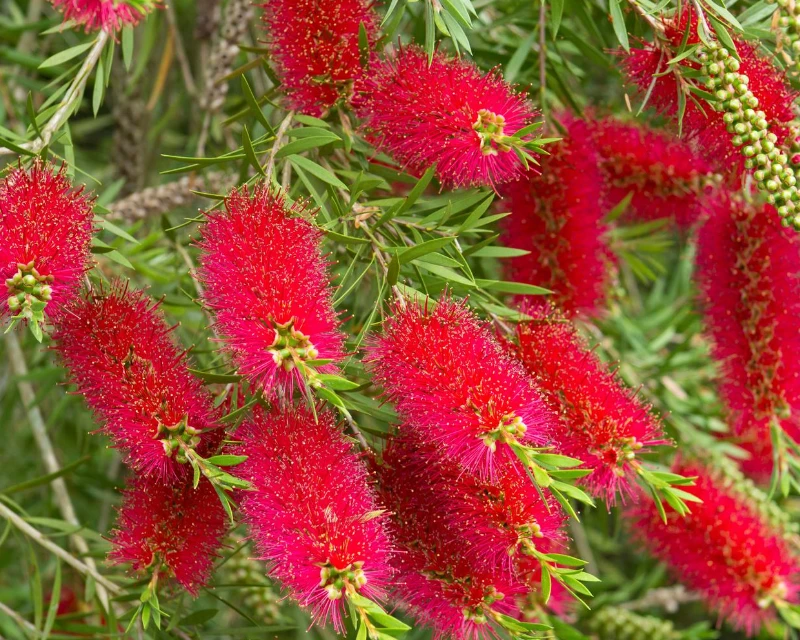
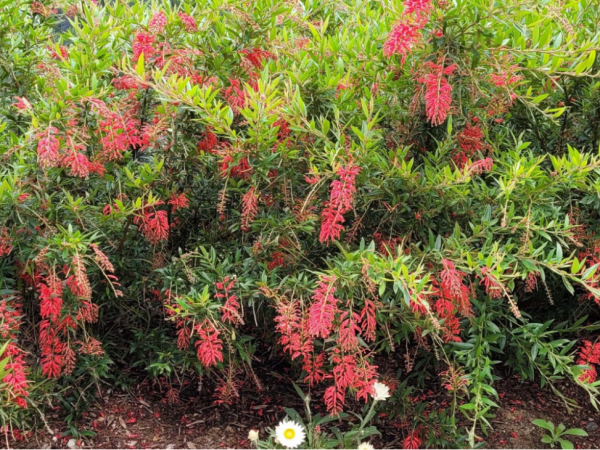
Source: Yates Australia ( Bottlebrush)
2. Bottlebrush (Callistemon spp.)
- Description: Named for its bright, cylindrical flowers that resemble a bottlebrush, it’s a favorite among nectar-loving birds.
- Care Tips: Thrives in full sun with regular watering during establishment. Prune lightly after flowering to maintain shape.
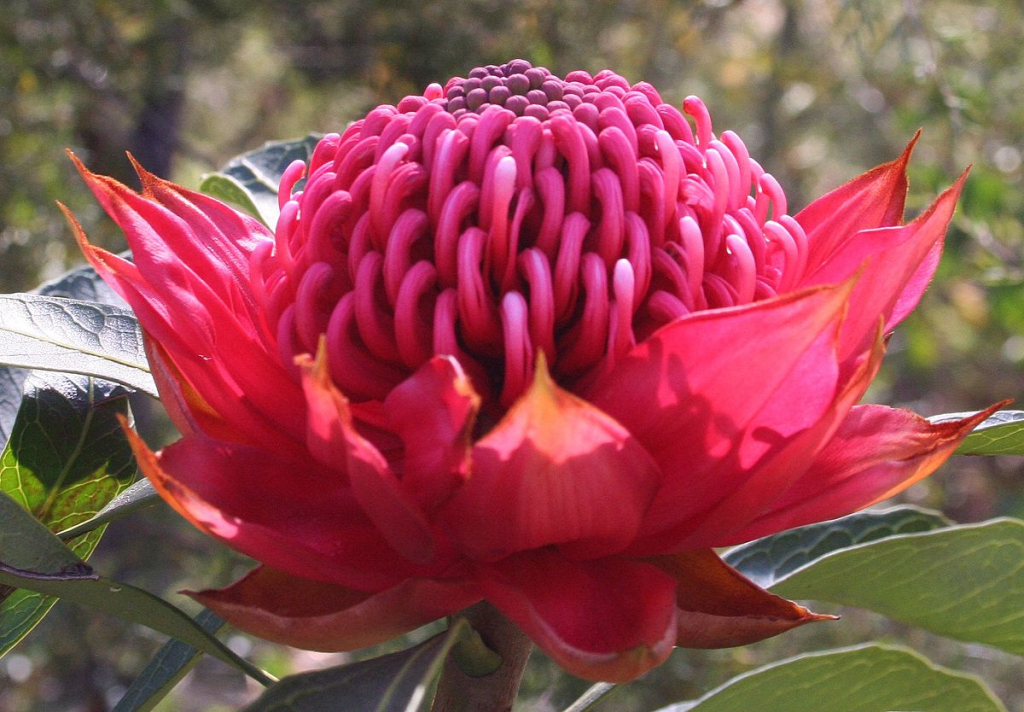
Source: Wikipedia (Waratah Telopea Speciossissima)
3. Waratah (Telopea speciosissima)
- Description: The striking red flower is the emblem of New South Wales. It’s a standout centerpiece in any garden.
- Care Tips: Needs well-drained soil, morning sun, and some afternoon shade. Avoid waterlogging and apply mulch to retain moisture.
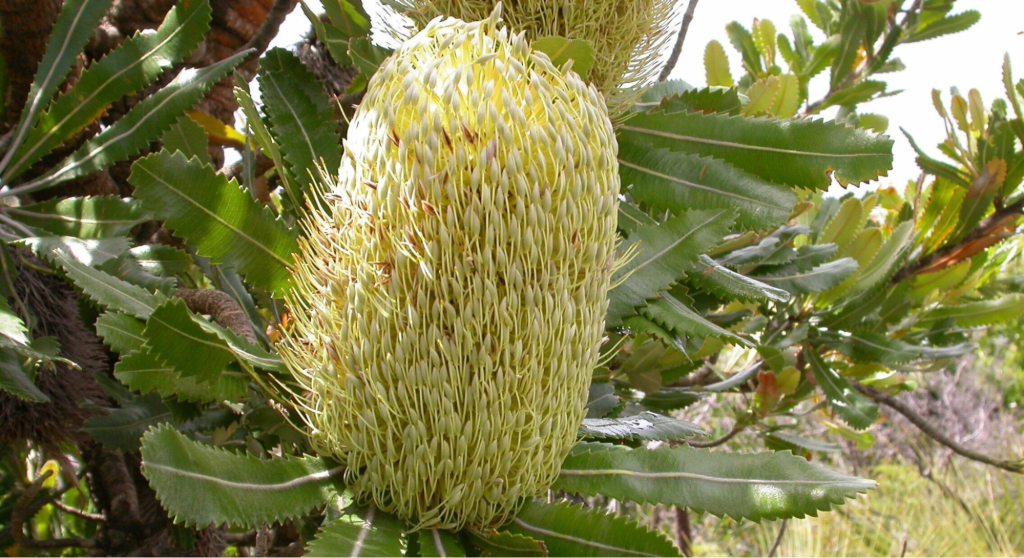
Source: Wikipedia (Banksia)
4. Banksia (Banksia spp.)
- Description: Recognized for its cone-like flowers and serrated leaves, Banksia provides year-round beauty and supports pollinators.
- Care Tips: Grows best in well-drained soil and full sun. Avoid phosphorus-rich fertilizers, which can harm roots.
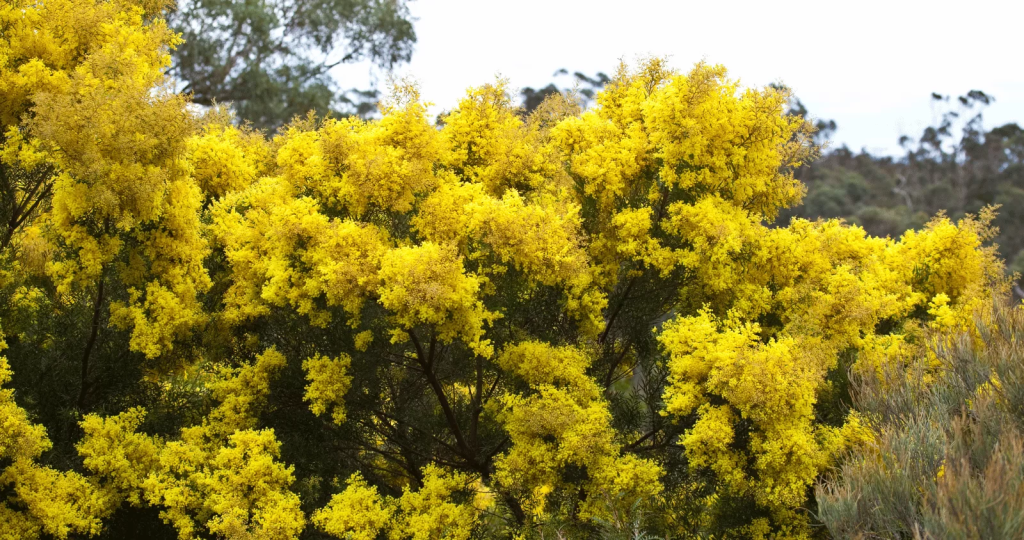
Source: Silverstone Gardening (Wattle Acacia)
5. Wattle (Acacia spp.)
- Description: Australia’s national flower, with its golden blooms, is a hardy addition to gardens.
- Care Tips: Plant in full sun with well-drained soil. Prune lightly after flowering to promote bushy growth.
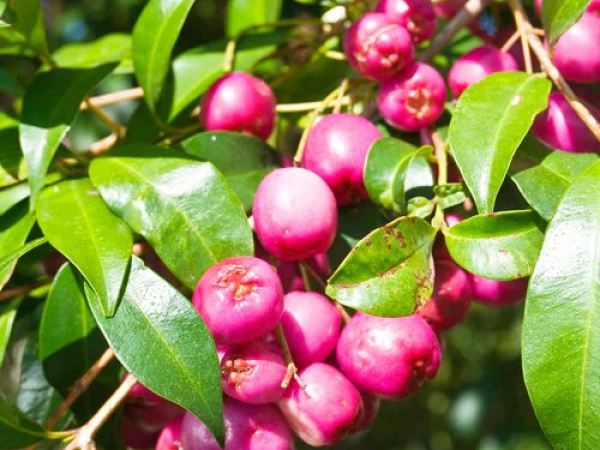
Source: Bush to Bowl (Lilly Pilly, Syzugium)
6. Lilly Pilly (Syzygium spp.)
- Description: Loved for its glossy leaves, edible berries, and versatility as a hedge or feature plant.
- Care Tips: Prefers rich, well-drained soil and regular watering during dry spells. Prune to shape and control growth.
Source: Australian Native Plants Society (Grevillea)
7. Grevillea (Grevillea spp.)
- Description: With intricate, spider-like flowers, Grevilleas come in a variety of colors and sizes, attracting birds.
- Care Tips: Grow in sandy or gravelly soil in full sun. Water sparingly and avoid over-fertilizing.
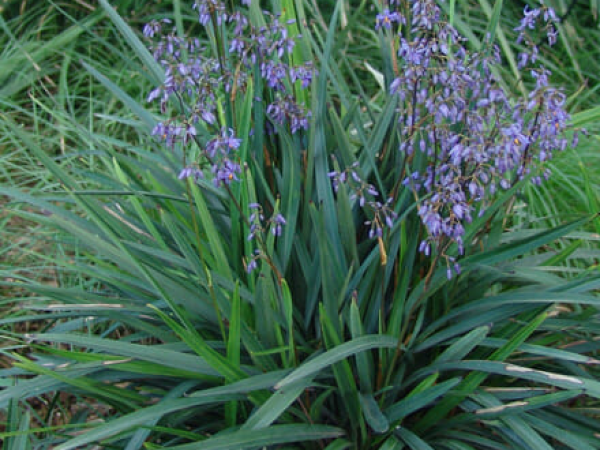
Source: Hello Hello Garden Plants & Supplies (Blue Flax Lily (Dianella)
8. Blue Flax Lily (Dianella spp.)
- Description: This hardy groundcover features purple flowers and vibrant blue berries.
- Care Tips: Plant in well-drained soil with dappled sunlight. Minimal watering is needed once established.
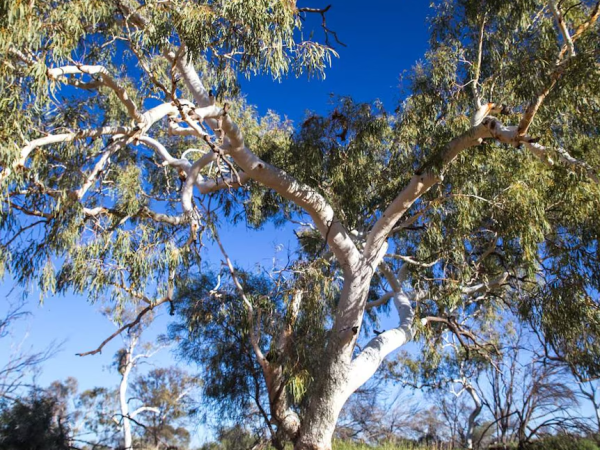
Source: ABC News (Eucalyptus)
9. Eucalyptus (Eucalyptus spp.)
- Description: Famous for its aromatic leaves and towering presence, it’s a staple in Australian landscapes.
- Care Tips: Grows in a wide range of soils but prefers full sun. Ensure adequate space for roots.
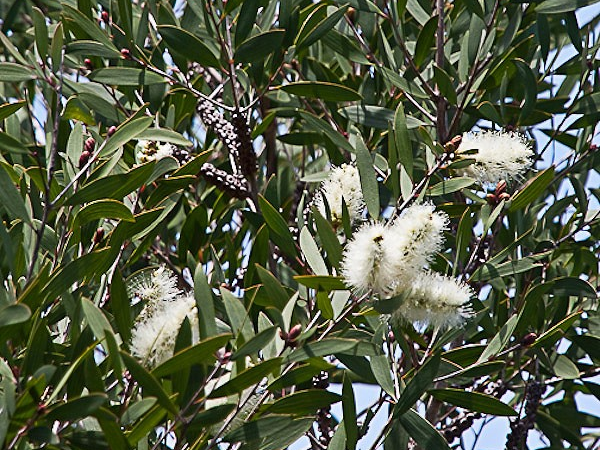
Source: Treasure Coast Natives Paperbark Tree (Melaleuca)
10. Paperbark Tree (Melaleuca spp.)
- Description: Known for its peeling bark and fluffy white flowers, this tree adds texture to any garden.
- Care Tips: Plant in moist, well-drained soil and full sun. It tolerates wet conditions and can be used in water-sensitive designs.
Basic Guide to Looking After Australian Native Plants
1. Choose the Right Plant for Your Region
- Research native plants suited to your local climate and soil type.
2. Prepare the Soil
- Australian natives often prefer low-nutrient, well-draining soil. Incorporate organic matter sparingly.
3. Water Wisely
- While most natives are drought-tolerant, water them regularly during establishment (the first 6–12 months).
4. Mulching
- Use mulch to retain moisture, suppress weeds and regulate soil temperature. Avoid piling mulch against stems.
5. Fertilising
- Opt for low-phosphorus fertilisers specifically designed for native plants.
6. Pruning
- Prune after flowering to maintain shape and encourage growth. Remove dead or diseased branches.
7. Pest Management
- Keep an eye out for pests like scale or caterpillars. Use eco-friendly solutions if needed, such as neem oil or natural predators.
8. Companion Planting
- Group plants with similar water and sunlight needs to create harmonious garden zones.
Top 5 Australian Native Plants Needing Conservation
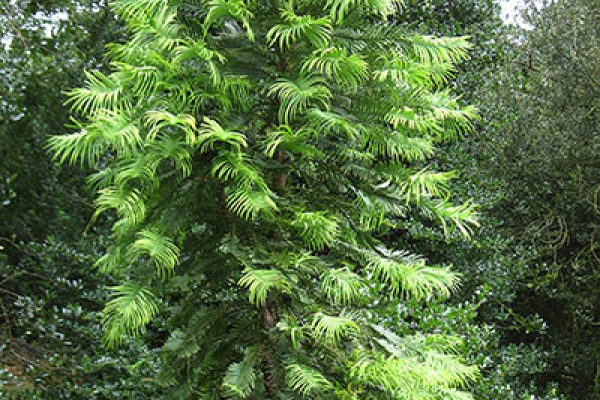
Source: Australian Native Plants Society (Wollemi Pine)
1. Wollemi Pine (Wollemia nobilis)
- Status: Critically endangered.
- Threats: Habitat loss and climate change.
- Conservation Efforts: Propagation programs and protection of wild populations.
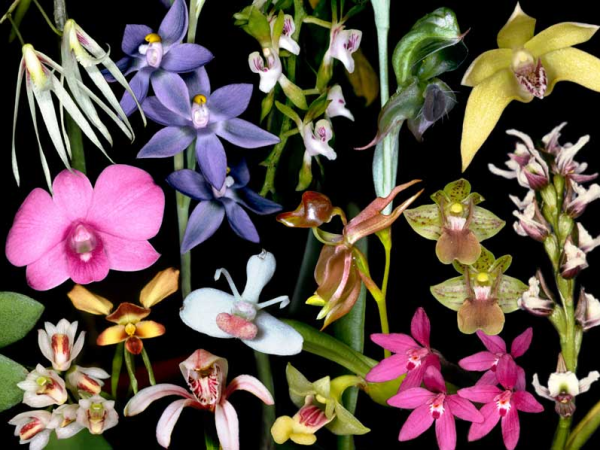
Source: Australian National Botanic Gardens Native Orchids
2. Native Orchids (Various species)
- Status: Many species are endangered.
- Threats: Land clearing and illegal collection.
- Conservation Efforts: Habitat preservation and cultivation by botanical gardens.
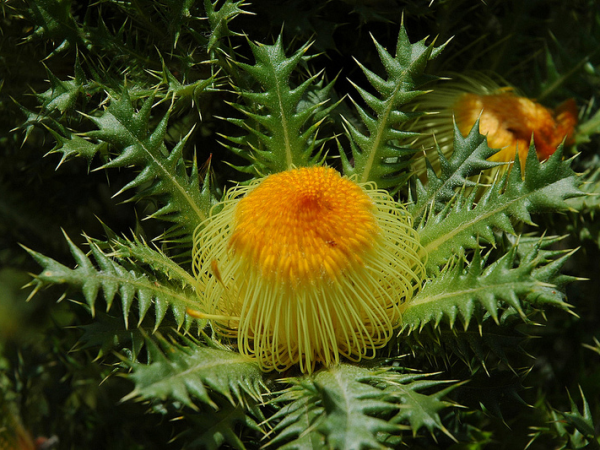
Source : Phys Org. Stirling Range Dryandra (Banksia montana)
3. Stirling Range Dryandra (Banksia montana)
- Status: Endangered.
- Threats: Fungal diseases and habitat degradation.
- Conservation Efforts: Seed banking and habitat restoration.
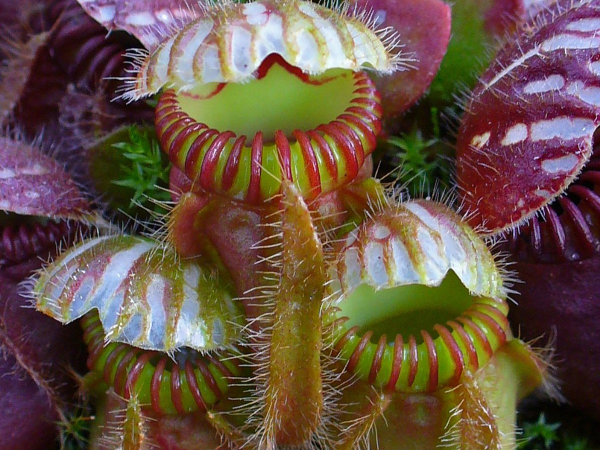
Source: Wikipedia Albany Pitcher Plant (Cephalotus follicularis)
4. Albany Pitcher Plant (Cephalotus follicularis)
- Status: Vulnerable.
- Threats: Habitat destruction and invasive species.
- Conservation Efforts: Protection of wetlands and cultivation in controlled environments.
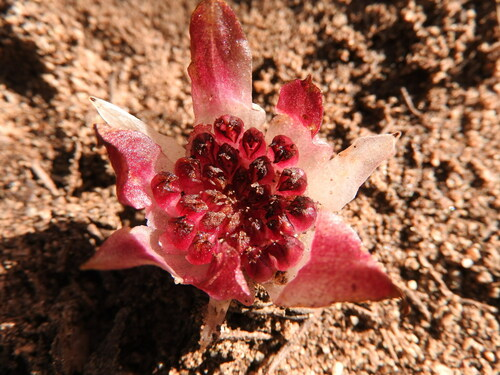
Source: Western Underground Ordchid (Rhizanthella gardner)
5. Western Underground Orchid (Rhizanthella gardneri)
- Status: Critically endangered.
- Threats: Limited distribution and habitat destruction.
- Conservation Efforts: Research and propagation efforts in botanical institutions.
Benefits of Conserving Native Plants
Preserving native plants is essential for maintaining biodiversity, ensuring the survival of unique species and supporting Australia’s rich ecosystems. By incorporating endangered species into your garden (where permitted), you can play a role in conservation efforts.
Conclusion
Australian native plants are a celebration of the continent’s natural beauty and resilience. By choosing these plants for your backyard, you’re not just creating a low-maintenance, water-efficient garden but also contributing to the preservation of Australia’s unique flora. Whether you’re cultivating Kangaroo Paw for its striking blooms or providing a haven for endangered species like the Wollemi Pine, your efforts make a difference.
Start your journey into native gardening today and transform your outdoor space into a thriving, eco-friendly sanctuary that honors Australia’s heritage.